RNG Certification Standards Across Licensed UK Slot Platforms: A Detailed Review
Dana Becker · Oct 31, 2026
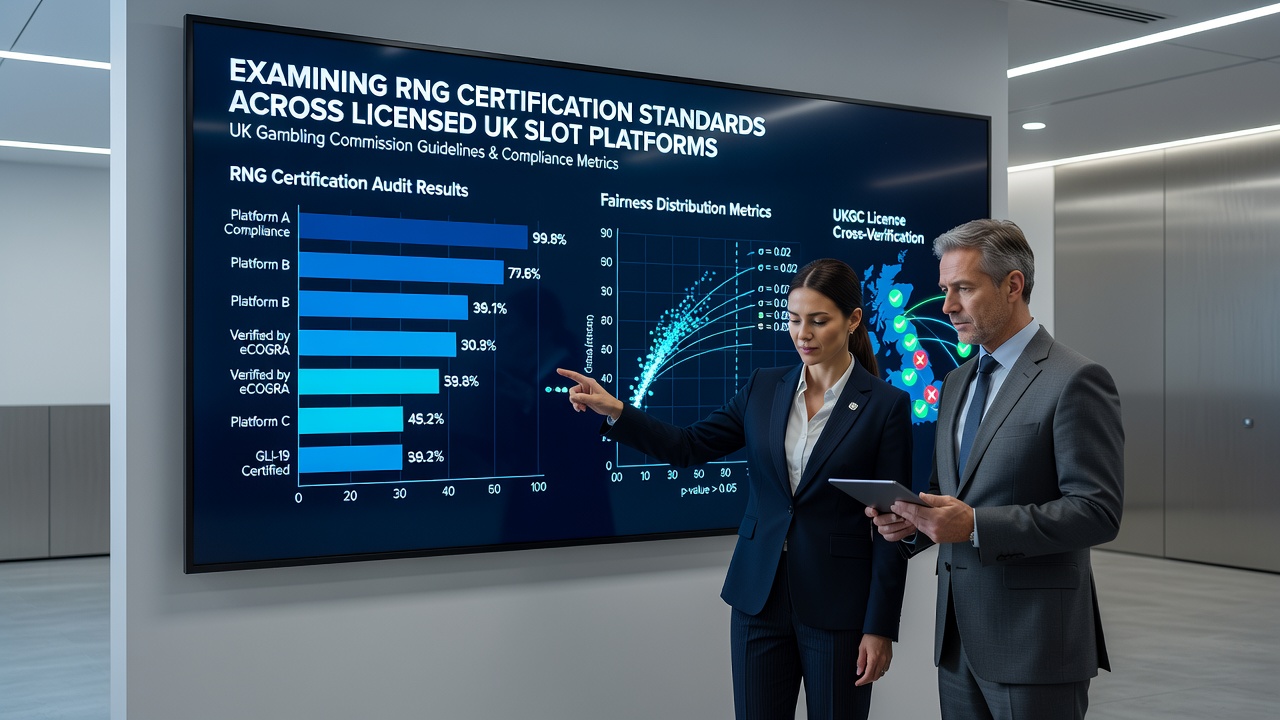
RNG Certification Standards Across Licensed UK Slot Platforms: A Detailed Review
Random number generator certification forms the backbone of fairness verification for slot platforms operating under UK licences, and observers note that independent testing laboratories apply rigorous statistical analysis to confirm true randomness in game outcomes. Data from multiple jurisdictions shows that these evaluations rely on large sample sizes exceeding millions of spins, while statistical models check for uniform distribution and absence of predictable patterns. Platforms must demonstrate compliance before receiving approval to offer games to players, and this process involves both initial audits plus ongoing monitoring at regular intervals.
Core Elements of RNG Evaluation
Testing begins with source code review where engineers examine the algorithms that drive number generation, and laboratories apply suites such as Diehard and NIST to measure entropy levels along with cycle lengths. Certified systems must pass these benchmarks consistently, after which hardware or software configurations receive seals that indicate adherence to international benchmarks. Experts have observed that seed values and scaling methods receive particular scrutiny because any weakness here can compromise entire game libraries, and platforms integrate these certified RNG modules directly into slot titles to maintain integrity across every spin sequence.
Independent Laboratories and Their Roles
Several global testing houses handle certification for platforms active in the UK market, including Gaming Laboratories International and BMM Testlabs, while regional variations appear in how each body structures its protocols. Figures reveal that GLI maintains testing facilities across North America and Europe, and their reports often reference cross-border standards developed through collaboration with regulators outside the UK. One study conducted by researchers at the University of Nevada Reno highlighted similarities between North American and European RNG requirements, noting that both emphasise long-term statistical stability over short-term variance. Platforms submit detailed documentation covering algorithm implementation, and auditors conduct live environment tests to replicate real-world conditions before issuing formal certification documents.
What's interesting is how certification timelines have evolved, with many laboratories now incorporating automated monitoring tools that flag anomalies in real time rather than relying solely on periodic manual reviews. This shift aligns with broader industry moves toward continuous compliance frameworks that began gaining traction in late 2025.

Developments Expected by October 2026
Regulatory updates scheduled for October 2026 are set to introduce enhanced requirements around quantum-resistant algorithms in RNG systems, and platforms have already begun preliminary assessments to identify any legacy components that may require replacement. According to data compiled by the Nevada Gaming Control Board, similar forward-looking standards have reduced detected irregularities by measurable margins in tested jurisdictions, and UK-licensed operators are reviewing these findings to prepare their own infrastructure. The transition involves updating certification criteria to account for emerging computational threats, while maintaining backward compatibility for existing certified games during the migration period.
Practical Implications for Platform Operators
Operators must coordinate with testing houses well in advance of game launches because certification cycles typically span several weeks, and any modifications to game logic trigger fresh evaluations. There's this case where experts found that even minor updates to bonus features required complete re-testing of the underlying RNG, which delayed releases by up to six weeks. Platforms therefore maintain dedicated compliance teams that track version control across all certified modules, and they archive full audit trails to demonstrate ongoing adherence during regulatory inspections. Research indicates that proactive engagement with laboratories helps minimise these delays, while shared best practices across international operators accelerate knowledge transfer on common technical challenges.
Statistical Benchmarks and Reporting Standards
Certification reports detail chi-square tests, serial correlation checks, and poker test results among other metrics, and these outputs must fall within predefined tolerance bands before approval. Observers note that laboratories publish anonymised aggregate data periodically, allowing industry participants to compare performance across different RNG implementations. A report from the Australian Communications and Media Authority examined similar datasets from Oceania markets and identified consistent patterns in how certified systems behave under high-volume load, providing additional reference points for UK platform teams. Documentation also covers the physical security of RNG hardware when applicable, including tamper-evident seals and environmental controls that protect against external interference.
Conclusion
Certification standards continue to adapt as computational capabilities advance, and platforms operating under UK licences integrate these evolving requirements into their operational frameworks. The combination of initial audits, continuous monitoring, and scheduled regulatory updates ensures that RNG systems remain reliable components of the slot gaming ecosystem. Those who have studied the process recognise that transparent reporting and international alignment strengthen overall player confidence in licensed offerings across multiple markets.